
Calculate Your Extracurricular Impact for College Apps

For many high school students, preparing for college means more than earning good grades and performing well on standardized tests. It also means participating in extracurricular activities, whether that’s joining clubs, competing in sports, volunteering, or pursuing academic interests outside the classroom.
But how many extracurricular activities should a student participate in? Is it better to join several organizations or dedicate more time to just a few? And what kinds of activities actually impress college admissions officers?
While there is no universal formula for building the perfect college application, admissions offices generally agree on one important principle: meaningful involvement in a few activities can be more compelling than superficial participation in many.
The key is longitudinal commitment, or sustained dedication to an activity over time. Students who develop their skills, assume greater responsibilities, and make meaningful contributions through their extracurricular activities can build stronger college applications while also gaining valuable personal experience.
Click here to go straight to the impact calculator.
What Do Colleges Look for in Extracurricular Activities?
Extracurricular activities give admissions officers a better understanding of who students are beyond their academic records. Their interests, accomplishments, and responsibilities can reveal qualities that grades and test scores alone cannot capture.
At highly selective universities, these activities can also help distinguish applicants with similarly strong academic qualifications. In its holistic admissions guidance, Stanford University explains that “an exceptional depth of experience in one or two activities may demonstrate your passion more than minimal participation in five or six clubs.” Similarly, Harvard University explicitly states that it is more interested in the quality of students’ activities than their quantity. Harvard encourages applicants to emphasize the contributions they make to their schools, communities, and families rather than attempting to fill every available space on their applications. Texas A&M University advises prospective students that having a substantial impact on a few organizations is preferable to minimal involvement in several. Closer to home, Rice University encourages applicants to highlight activities that have contributed significantly to their personal growth, skill development, or community involvement.
Despite differences in their admissions processes, these universities share an emphasis on meaningful participation.
Of course, extracurricular activities are only one part of the application. According to the National Association for College Admission Counseling’s 2023 admissions survey, high school grades and the rigor of a student’s curriculum remain substantially more important to colleges overall than extracurricular involvement. Students should therefore approach extracurricular activities as an opportunity to demonstrate their interests and develop their abilities, not as a reason to compromise their academic performance.
Depth vs. Breadth: Why Long-Term Commitment Matters
Imagine two high school students preparing their college applications. The first student belongs to eight different clubs and organizations. They have attended meetings and participated in occasional events, but have not taken on significant responsibilities or made notable contributions to any one organization. The second student participates in just three extracurricular activities. One is a robotics club they joined during freshman year. Over four years, they progressed from learning basic programming to designing competition robots, mentoring younger students, and eventually leading a team project.
Which student has the stronger extracurricular record?
Although the first student can list more activities, the second has a more compelling story to tell. Their commitment to robotics demonstrates developing expertise, initiative, collaboration, and leadership. This is the value of longitudinal commitment. By investing substantial time in an activity, students create opportunities to demonstrate several qualities that colleges appreciate:
- Dedication: Sustained participation demonstrates that students can make commitments and follow through on them.
- Growth: Continued involvement gives students opportunities to develop increasingly sophisticated skills.
- Leadership: Experienced participants may take on additional responsibilities, organize projects, or mentor younger members.
- Impact: Students who remain involved over time may have more opportunities to produce meaningful results for their organizations or communities.
Importantly, long-term commitment is not simply about how many years a student participates in an activity. A student who attends club meetings for four years without contributing much may have a less compelling experience to describe than someone who dedicates one year to an ambitious project. What matters most is what students accomplish and how they develop through their participation.
Does This Mean Students Should Avoid Trying New Things?
Not at all!
Exploring different activities is an important part of discovering personal interests, especially during the first years of high school. Students may not know whether they enjoy debate, computer programming, theatre, or volunteering until they have tried them. Participating in several unrelated activities can also demonstrate curiosity and a variety of interests.
In fact, Harvard acknowledges that successful applicants include both well-rounded students with a variety of contributions and those who have demonstrated exceptional achievement in one particular area. The objective is not necessarily to specialize in a single activity. Rather, students should use their early high school years to explore their interests and then dedicate more time to the activities they find most rewarding.
How Strong Are Your Extracurricular Activities for College Apps?
To help students evaluate their involvement, we’ve developed an extracurricular scoring calculator based on five factors: commitment, skill development, leadership, impact, and personal significance. Each activity receives a score out of 100 and a corresponding letter grade.
How We Calculate Your Extracurricular Impact Score
Rate each category from 0 to 5 using the guidelines below. A rating of 0 indicates no demonstrated evidence, while 5 represents exceptional involvement. Each category contributes a different number of points to your final score.
1. Commitment & Consistency — 20 points
- 1: Brief or occasional participation.
- 2: Consistent participation for approximately one semester.
- 3: Regular involvement for approximately one school year.
- 4: Sustained participation for approximately two years.
- 5: Three or more years of dedication, or an exceptionally intensive commitment.
2. Skill Development & Growth — 20 points
- 1: Learning the fundamentals.
- 2: Developing basic competence.
- 3: Working independently and demonstrating improvement.
- 4: Demonstrating advanced skills and substantial growth.
- 5: Demonstrating mastery through sophisticated work, accomplishments, or teaching others.
3. Leadership & Initiative — 20 points
- 1: Participates under others’ direction.
- 2: Takes on occasional responsibilities.
- 3: Independently manages recurring responsibilities.
- 4: Leads projects, coordinates peers, or mentors others.
- 5: Creates or substantially expands initiatives or assumes major ongoing responsibility.
4. Contributions & Impact — 25 points
- 1: Participates with limited identifiable contributions.
- 2: Makes modest contributions to group activities.
- 3: Contributes consistently to projects or organizational goals.
- 4: Produces identifiable accomplishments or meaningful benefits for others.
- 5: Produces significant, sustained, and demonstrable results.
5. Personal Significance & Alignment — 15 points
- 1: Limited personal significance.
- 2: Reflects an emerging interest or curiosity.
- 3: Demonstrates a meaningful personal interest.
- 4: Strongly reflects personal interests, values, responsibilities, or goals.
- 5: A defining commitment that substantially shapes personal development or future direction.
The calculator awards 20%, 45%, 65%, 85%, or 100% of each category’s available points for ratings of 1 through 5, respectively. This means that students demonstrating strong involvement can receive an A without earning perfect scores in every category.
Example Calculation: Evaluating a Debate Team Member
Consider a student who has participated in debate for three years, developed advanced skills, mentored younger debaters, and helped organize tournaments.
| Category | Rating | Points |
| Commitment & Consistency | 5/5 | 20 |
| Skill Development & Growth | 4/5 | 17 |
| Leadership & Initiative | 5/5 | 20 |
| Contributions & Impact | 4/5 | 21.25 |
| Personal Significance & Alignment | 4/5 | 12.75 |
| Total | 91/100 (A-) |
This student demonstrates exceptional commitment and leadership, along with strong performance in the remaining categories. To strengthen the activity further, they might organize a major tournament, establish a recurring mentorship program, or expand opportunities for younger debaters.
Remember that these grades are developmental assessments, not predictions of college admission. A younger student just beginning an activity may receive a lower score simply because they haven’t had time to develop deeper involvement. The goal is to measure your progress and identify meaningful ways to grow—not to accumulate perfect scores.
Try the Extracurricular Activity Calculator
Use the sliders below to evaluate an activity. Your score and letter grade will update automatically as you adjust your ratings.
Extracurricular Activity Calculator
Rate one activity from 0 to 5 in each category. Your score updates automatically.
Three or more years of dedication, or an exceptionally intensive commitment.
20 / 20 pointsDemonstrates advanced skills and substantial growth.
17 / 20 pointsCreates or substantially expands initiatives, or assumes major ongoing responsibility.
20 / 20 pointsProduces identifiable accomplishments or meaningful benefits for others.
21.25 / 25 pointsStrongly reflects personal interests, values, responsibilities, or goals.
12.75 / 15 pointsWhat Should Students Aim For?
As a general benchmark, students approaching senior year might aim for one A-range activity and two B-range activities. This suggests one exceptional commitment alongside other meaningful interests. However, this is a planning guideline, not an admissions requirement. Employment, family responsibilities, personal projects, and interests unrelated to an intended college major can all demonstrate meaningful involvement.
What Are the Best Extracurricular Activities for College Applications?
There is no single extracurricular activity that guarantees an advantage in college admissions.
While students sometimes assume that scientific research, prestigious internships, or founding nonprofit organizations are inherently more impressive than ordinary school activities, admissions offices generally encourage students to pursue opportunities that genuinely interest them.
For example, the Massachusetts Institute of Technology asks applicants to list only four of their most important activities. Its admissions office encourages students to choose their extracurricular pursuits because they find them enjoyable, interesting, or challenging, rather than because they believe those activities will impress colleges.
Meaningful extracurricular experiences can come from many sources, including:
- Academic activities: Debate, robotics, mathematics competitions, academic clubs, science fairs, and independent research.
- Athletics: School sports, club teams, individual competitions, coaching, and athletic leadership.
- Arts: Theatre, music, dance, visual arts, creative writing, and filmmaking.
- Community service: Volunteering, tutoring, environmental conservation, and community organizing.
- Student leadership: Student government, school publications, event planning, and club leadership.
- Employment and family responsibilities: Part-time jobs, family businesses, childcare, and household responsibilities.
- Independent projects: Coding, writing, entrepreneurship, personal research, and other self-directed pursuits.
The most important question is not necessarily which category an activity belongs to, but how a student engages with it.
For example, a student interested in creative writing might begin by joining a school’s literary magazine. Over time, they could become an editor, help younger writers improve their work, and eventually lead the publication.
Likewise, a student who works at a local restaurant might develop customer service skills, assume additional responsibilities, and eventually train new employees. These experiences can demonstrate maturity, reliability, and leadership just as effectively as many formal extracurricular programs.
The following examples illustrate how ordinary activities can develop into more substantial commitments.
| Activity | Initial Particiation | Deeper Commitment | College Major | Career |
|---|---|---|---|---|
| Debate | Attends practices and competitions | Mentors younger debaters and helps organize tournaments | Political Science, Communications | Attorney, Policy Analyst |
| Athletics | Participates on a team | Develops advanced skills and helps coach younger players | Kinesiology, Sports Management | Coach, Athletic Trainer |
| Community Service | Volunteers occasionally | Coordinates recurring projects or trains new volunteers | Social Work, Public Health | Social Worker, Nonprofit Director |
| Robotics | Learns programming and engineering fundamentals | Leads a technical project and mentors new members | Mechanical Engineering, Computer Science | Robotics Engineer, Software Developer |
| Creative Writing | Contributes to a school publication | Edits submissions and manages the publication | English, Creative Writing | Author, Editor |
| Employment | Works part-time | Trains employees or assumes additional responsibilities | N/A | N/A |
Students do not need to pursue leadership titles in every activity. Consistent contributions, advanced skills, and meaningful accomplishments can be equally important.
Top Houston-Area Extracurricular Programs for High Schoolers
University Interscholastic League
The University Interscholastic League (UIL) organizes academic competitions for Texas schools in subjects ranging from mathematics and computer science to journalism, debate, and theatre.
Students can begin competing early in high school and continue developing their skills through increasingly challenging competitions. For example, a freshman participating in UIL debate might initially focus on learning research and argumentation techniques. By junior or senior year, that same student could be competing at a higher level while helping newer teammates prepare for tournaments.
Although UIL competitions are primarily associated with Texas public schools, students attending private schools can seek comparable opportunities through school-sponsored academic competitions and organizations.

Community Service: Houston Food Bank
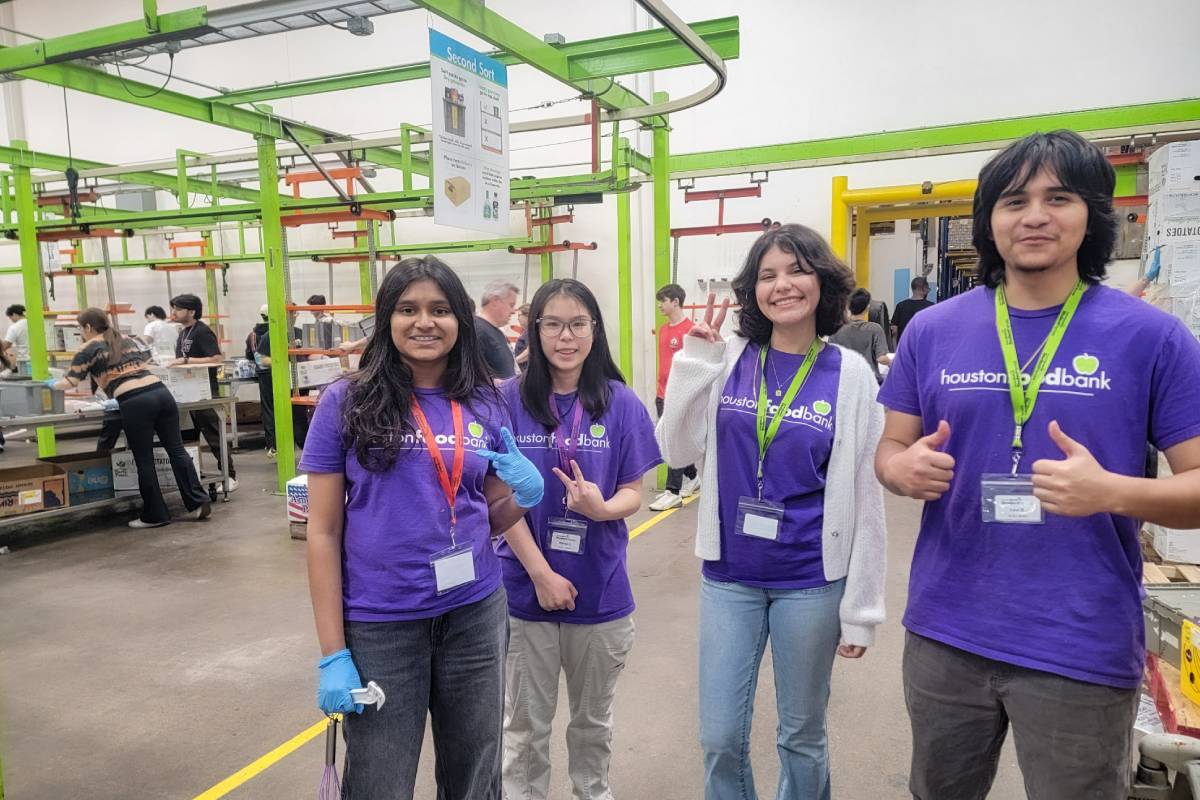
The Houston Food Bank’s Student Heroes program offers a particularly clear example of how volunteer work can develop into sustained leadership. The program provides high school students with opportunities to organize volunteer efforts, develop project management skills, and help address food insecurity in the Houston area.
Students begin with introductory responsibilities and can advance into positions where they supervise projects, assist other volunteers, and help train new participants. The program requires students to have completed at least 12 hours of volunteering before becoming eligible to apply, and participants must meet additional service commitments. Rather than volunteering for a few hours simply to fulfill a school’s service requirement, students can use a program like Student Heroes to develop long-term involvement in a cause they care about.
Science and Conservation: Houston Zoo
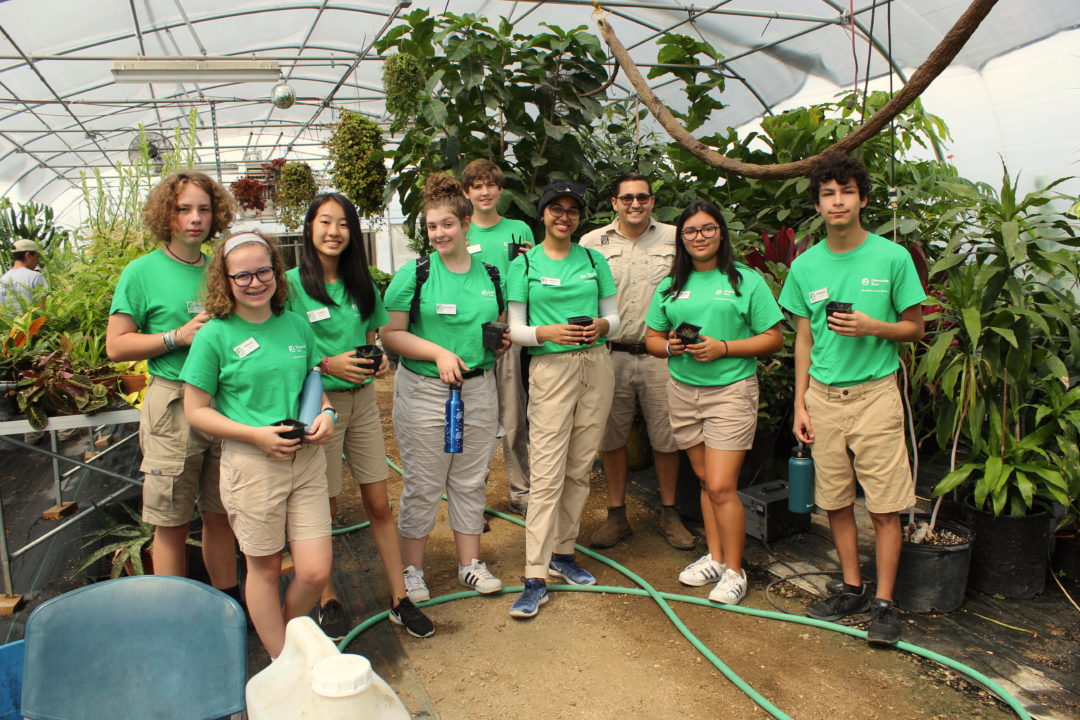
For students interested in animals, biology, or environmental science, the Houston Zoo’s Zoo Crew program offers opportunities to explore conservation and animal-related education.
After completing an initial summer in Zoo Crew, eligible students may apply for returning positions involving animal care, guest education, or camp mentorship. Experienced participants may also pursue positions on the Zoo’s Teen Leadership Council, where they can mentor other students and contribute to the program’s development. This progression demonstrates how an initial interest in wildlife can turn into a multi-year commitment involving specialized knowledge and greater responsibility.
Science Education: Houston Museum of Natural Science
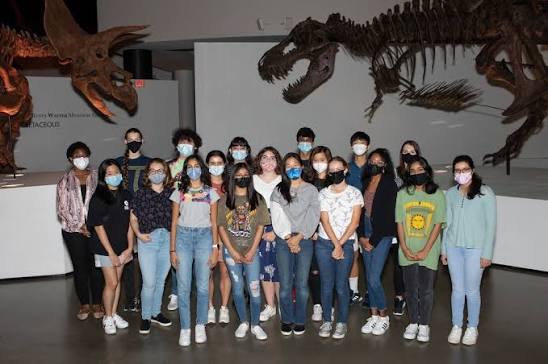
The Houston Museum of Natural Science’s Moran Teen Advisory Council provides another opportunity for students to deepen their involvement with a local institution. Council members commit to a two-year term and help develop programming, plan events, support volunteer activities, and identify ways for the museum to engage younger audiences.
For students interested in science education, museum programming, or community outreach, this type of involvement can provide opportunities to apply their interests while contributing to a larger organization.
Community Engagement: Houston Public Library
The Houston Public Library’s Teen Advisory Club gives students opportunities to contribute to library activities and services. Participants attend monthly meetings and may help with programming, creative projects, and skill-development activities.
Over time, consistent participation can provide students with opportunities to develop organizational skills and contribute to programs that benefit other Houston teenagers.

Other Houston-Based Extracurricular Options
These are only a handful of the many opportunities available to local students. For additional ideas, see General Academic’s guide to summer opportunities for Houston high school students. Students particularly interested in science and medicine may also benefit from our guide to high school research internships at the Texas Medical Center.
Of course, students do not need to join an established organization to demonstrate long-term dedication. Independent projects, part-time employment, family responsibilities, and informal community initiatives can also provide meaningful experiences.
How to Build a Strong Extracurricular Record Throughout High School
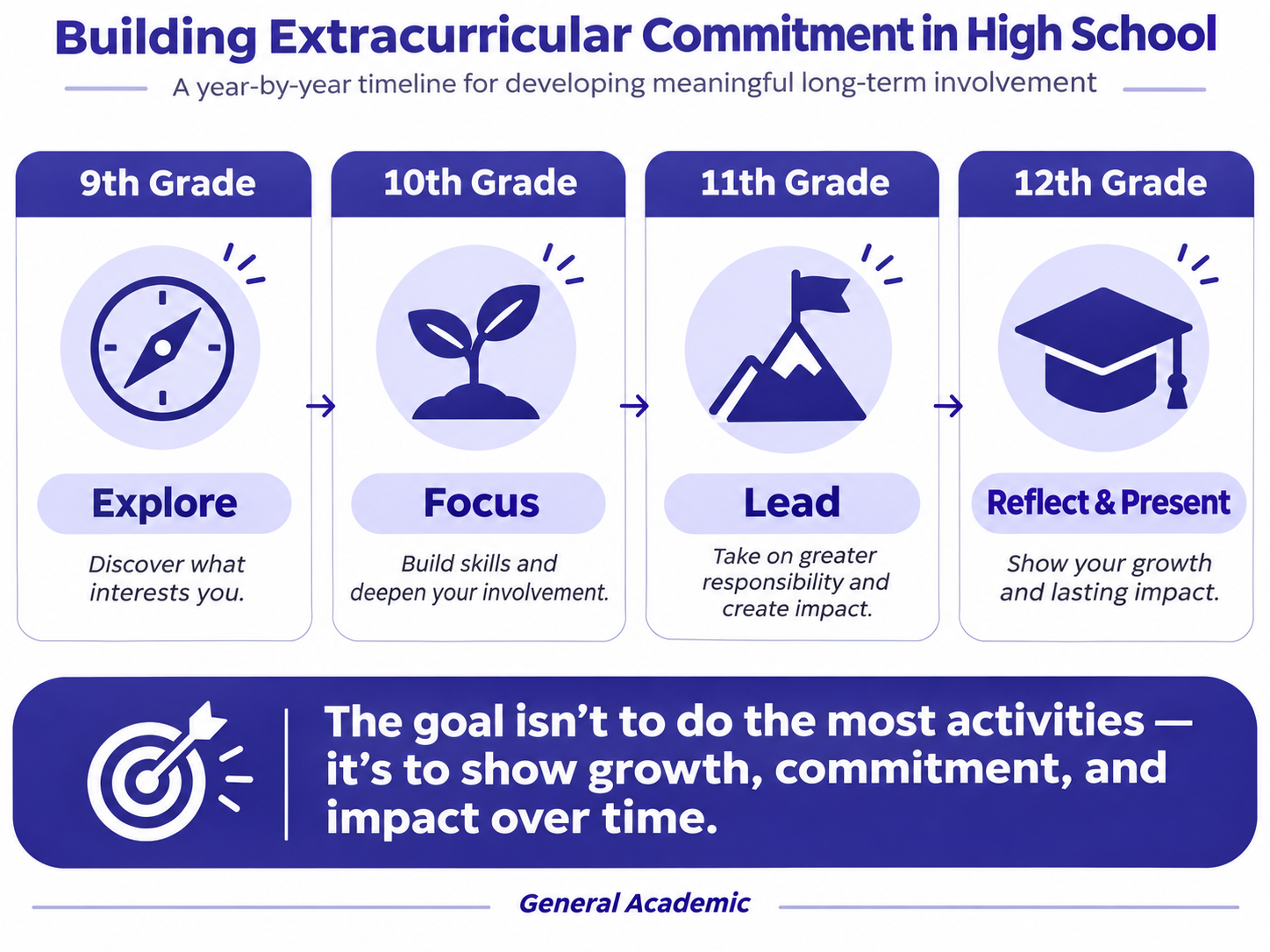
Although students can begin meaningful extracurricular activities at any age, approaching high school with a general plan can help them develop their interests without becoming overwhelmed. Importantly, this timeline is a general recommendation, not an admissions requirement. A student who discovers a genuine interest during junior year should not hesitate to pursue it simply because they cannot demonstrate four years of participation.
Freshman Year: Explore Your Interests
Ninth grade is an excellent time for students to experiment with different extracurricular activities. Students might join several clubs, try a new sport, audition for a school production, or begin volunteering. At this stage, the goal should be discovering activities they genuinely enjoy rather than accumulating impressive accomplishments.
By the end of freshman year, students should ideally have a clearer understanding of which activities they might want to continue.
Sophomore Year: Focus and Develop
During tenth grade, students can begin dedicating more time to the activities they found most interesting. This might involve increasing their participation in an academic organization, competing more seriously in a sport, developing an independent project, or returning to a volunteer program.
Students should also seek opportunities to develop new skills and assume additional responsibilities. For example, a student who discovered an interest in computer programming during freshman year might begin building original projects or participating in coding competitions.
Junior Year: Deepen Your Commitment
Eleventh grade is an important time for students to build upon the experience they have accumulated. Students who have participated in organizations for several years may be ready to pursue leadership positions, mentor younger members, organize events, or undertake more ambitious projects.
However, leadership should be understood broadly. A student does not need to become club president or team captain to demonstrate initiative. A student who develops a valuable resource, improves an organization’s operations, or helps other participants succeed can demonstrate meaningful leadership without holding an official title.
Senior Year: Continue and Reflect
By senior year, students should have several meaningful experiences they can draw upon when completing college applications. This is also the time to reflect on what they have accomplished, how they have developed, and which activities have been most important to them. Students should continue participating in activities they enjoy rather than abandoning their commitments once applications are submitted.
How to Showcase Long-Term Commitment on College Applications
Developing meaningful extracurricular experiences is only part of the process. Students also need to communicate the significance of those experiences effectively.
The Common Application allows students to describe their extracurricular activities, including their positions, accomplishments, years of involvement, and approximate time commitments. However, its activity descriptions are extremely brief, with a limit of 150 characters. This makes it important to emphasize contributions rather than simply listing responsibilities.
Consider the difference between these two hypothetical descriptions of the same experience:
Basic description:
Member of robotics club for four years. Participated in meetings and robotics competitions.
Improved description:
Led robot design project, trained 6 new members, and helped team qualify for regional competition.
The second description provides specific evidence of responsibility, initiative, and accomplishment.
Students should also keep track of their activities throughout high school, recording important projects, awards, responsibilities, and other milestones. This makes it easier to write accurate, detailed descriptions when applications are due.
Long-Term Commitment Can Also Strengthen College Essays
The benefits of longitudinal commitment extend beyond the activities section. Students who have dedicated substantial time to an activity often have more experiences to reflect upon in personal statements and supplemental essays.
For example, an aspiring engineer who has spent several years on a robotics team might write about overcoming a difficult technical problem, learning to collaborate with teammates, or discovering an interest in a particular field of engineering.
These experiences can provide meaningful material for essays about personal growth, challenges, intellectual curiosity, or leadership.
This is particularly relevant for students applying to the University of Texas at Austin. One of UT Austin’s required first-year short-answer prompts asks students to identify the high school activity they are most proud of and explain why.
A student who can reflect on several years of developing skills and contributing to a meaningful activity may have particularly compelling material for this response.
Common Extracurricular Mistakes to Avoid
While meaningful extracurricular involvement can strengthen a college application, students should be careful not to approach their activities as a checklist of accomplishments.
- Joining too many organizations: Spreading time across numerous clubs can make it difficult to develop substantial skills or responsibilities in any of them.
- Prioritizing titles over contributions: Becoming president of an organization is not inherently impressive if the student accomplishes little in that role.
- Choosing activities solely for prestige: Expensive summer programs, internships, and other selective opportunities are not automatically more meaningful than ordinary activities pursued with genuine dedication.
- Neglecting academics: Extracurricular involvement should complement a student’s academic development, not undermine it.
- Continuing activities solely for appearances: Students should not feel obligated to remain in activities they no longer enjoy simply to demonstrate four years of participation.
Ultimately, students should pursue extracurricular activities because they find them meaningful, not because they believe there is a particular combination that colleges want to see.
Conclusion: Meaningful Commitment Matters More Than an Impressive List
When it comes to extracurricular activities, college admissions officers are generally more interested in what students accomplish than how many organizations they join.
Sustained commitment allows students to develop expertise, assume responsibilities, and make meaningful contributions to their schools and communities. It also gives them experiences that can help communicate their personalities, interests, and accomplishments throughout their college applications.
For Houston-area students, opportunities to develop these commitments are plentiful, ranging from school-sponsored academic competitions to community organizations, museums, and independent projects.
The most important thing is to begin exploring interests early, find activities worth pursuing, and look for opportunities to grow.
At General Academic, our Early Guidance and College Counseling Program helps students begin preparing for college as early as ninth grade. Our counselors work with families to develop individualized plans for academics, extracurricular involvement, and the college application process, helping students make the most of their high school years.
Learn More about College Admissions from General Academic