During the 2025-2026 fall testing cycle, around 400 Houston-area students prepared for their ISEE and SSAT private school admissions tests with General Academic. On average, our students improved ISEE scores by 2.11 stanines or 31.5 percentile rankings. While every child’s situation is unique and results cannot be guaranteed, we are delighted to see such excellent outcomes from this year’s cohort in their ISEE test score improvement. In particular, our students taking the ISEE Lower Level for applying to 6th grade and the ISEE Upper Level for applying to 9th grade did exceptionally well.
What is the ISEE test?
The ISEE is a peer-normed, standardized entrance exam required by most Houston-area private schools for admission. We recommend that students take the test twice (once in the fall testing period and again in winter) before submitting their ISEE results in January. The test contains 4 scored sections and 1 non-scored essay:
The Upper Level and Middle Level:
- Verbal Reasoning (VR) – 40 questions and 20 minutes
- Quantitative Reasoning (QR) – 37 questions and 35 minutes
- Reading Comprehension (RC) – 36 questions and 35 minutes
- Mathematics Achievement (MA) – 47 questions and 40 minutes
- Personal Essay – 1 prompt and 30 minutes
The Lower Level:
- Verbal Reasoning (VR) – 34 questions and 20 minutes
- Quantitative Reasoning (QR) – 38 questions and 35 minutes
- Reading Comprehension (RC) – 25 questions and 25 minutes
- Mathematics Achievement (MA) – 30 questions and 30 minutes
- Personal Essay – 1 prompt and 30 minutes
Students take the ISEE Upper Level to apply to high school (9th grade), the Middle Level for grades 7 & 8, and the Lower Level for grades 5 & 6. In Houston, the Upper Level is the most popular.
How is the ISEE test scored and what is a good score?
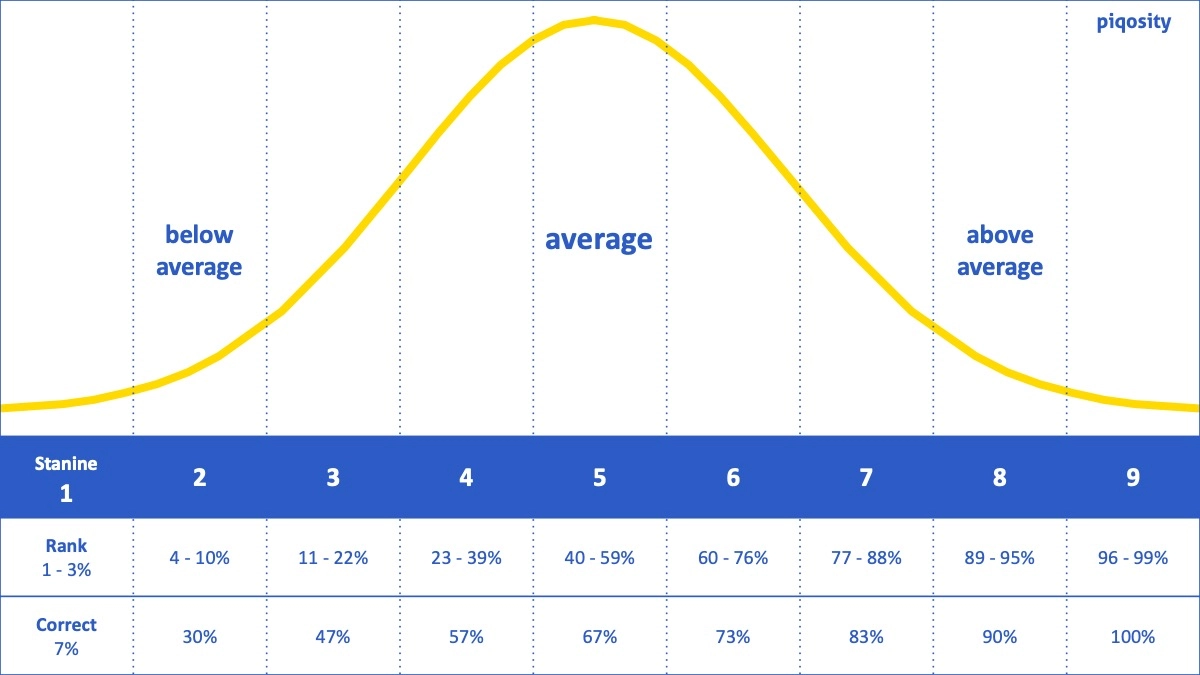
When you hear other parents discussing ISEE scores, they are usually referring to stanine scores. To understand a stanine score, take a normal curve which represents the testing population and divide it into 9 evenly sized slices. In general, a good ISEE score for an academically competitive school is a stanine score of 7, 8, or 9. Stanine scores of 4, 5, and 6 are considered average, and scores of 1, 2, and 3 are below average.
However, defining a “good score” really depends on several factors, including the schools to which you are applying. Very academically rigorous schools like St. John’s, Kinkaid, Strake, and St. Agnes generally prefer high scores like 7 and 8, while more broadly-focused schools like Episcopal, Emery/Weiner, and Houston Christian are more tolerant of average scores like 5 and 6.
Like most standardized tests including the ACT and SAT, the ISEE is a peer-normed test, which means that your child will be scored relative to all students at their grade level who have taken the ISEE over the last three years. This Norm Group does not include their current classmates or other students in the same grade for the year your child takes the ISEE.
Verbal Reasoning – Shortest and Quickest Section, Massive Growth
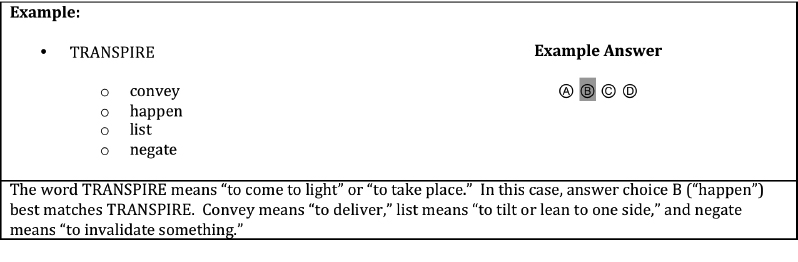
The Verbal Reasoning section (VR) is comprised of synonym and sentence completion questions. In practice, this section is mostly a test of a student’s vocabulary, which is generally built over time by regularly reading challenging material.
This season, we saw a massive breakthrough in this section. Our students demonstrated incredibly impressive gains by improving 2.39 stanines, or 35.0 percentile rankings. This represents a fantastic jump in performance!
We are always honing our study strategies to help students be productive both with their tutor and in their independent work. One great way to help your student improve their Verbal Reasoning score is by using flashcard lists, like the ones on Piqosity.com. We also recommend recording unfamiliar words encountered during practice, researching the etymology of words and their parts, identifying synonyms for each word, and using news words in writing and conversation.
Given that building vocabulary is a long-term process, we strive to help our younger students enjoy reading from an early age, such as by having them read great books known to improve vocabulary acquisition.
Quantitative Reasoning – Most Challenging Section, Biggest Score Gains
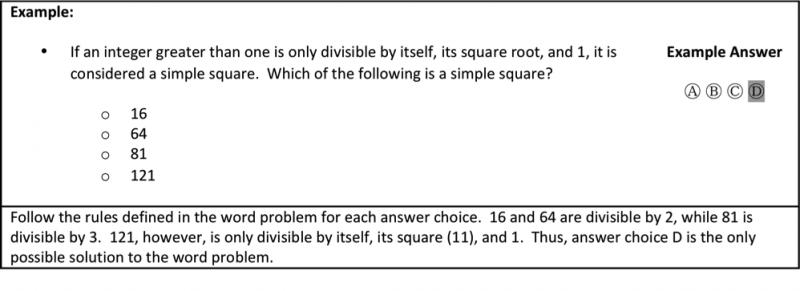
The Quantitative Reasoning section (QR) consists of math word problems and is by far the most challenging section of the ISEE for most Houston students.
In Quantitative Reasoning, our students showed a substantial improvement of 2.41 stanines, or 37.1 percentile rankings. This remains the highest gain across all of the test sections.
We attribute this improvement to our tutors’ great ability to remediate all weaknesses in math and teach our students new concepts, including those not yet taught in school. Our tutors work hard to strengthen each student’s understanding so that they’re better equipped to apply those skills to novel and complex math questions.
Reading Comprehension – Most Competitive Section
The Reading Comprehension section (RC) is composed of six passages of approximately 400-600 words that are accompanied by questions about the main idea and author’s purpose of the passage (and more).
Students generally see the least amount of growth in Reading Comprehension out of the ISEE’s four sections. However, we still saw solid gains of 1.32 stanines, or 18.4 percentile rankings, on average.
Reading Comprehension is the most competitive section of the ISEE in that most students tend to score highly in this section. Many students taking the ISEE come from educated family backgrounds, who expose their children to reading from an early age. As such, this educated norm group starts with higher scores, and students must maximize their accuracy in order to rank highly.
Mathematics Achievement – Longest Section with Steady Gains
The Mathematics Achievement section (MA) is similar to Quantitative Reasoning in that it’s comprised of math word problems, but its questions are comparatively more straightforward. While it’s usually considered easier than QR, it requires more test-taking endurance because it is the longest section on the Upper Level ISEE (47 questions in 40 minutes), and it is near the end of an already long exam.
Our students kept their momentum, and we saw an impressive 2.31 stanine improvement, which translates to 35.3 percentile rankings.
These fantastic improvements in both math sections showcase our students’ hard work. With structured practice and concept review, they were well-equipped to tackle any and all concepts on test day.
Essay – Not Scored But Not Ignored
The Essay is the final obstacle on the ISEE, and students have 2 pages to respond to a personal prompt, such as, “Tell us about a time that you overcame a challenge.” The Essay is not scored, but a copy is sent directly to each school so that they can see a sample of the student’s writing abilities under time constraints.
This makes the Essay a lower priority for us, but we still teach key strategies for strong essay writing. This includes ensuring the student knows how to structure a basic essay, identify specific examples that support their thesis, and respond in such a way that showcases their personality and strengths.
How well do General Academic Students Score on the ISEE?
This season, our students improved their ISEE scores by over 2 stanines in every section on average. The average final stanine our students submit in their applications was over 6.6 — General Academic’s students, on average, score better than over 70% of students who take the ISEE.
Before their preparations began, our students averaged around the 42nd percentile on their diagnostic. After working with us and diligently following through on our practice recommendations, their scores improved significantly to be around the 74th percentile overall. We are very proud of our students’ ISEE score improvement, and we are thrilled that our curriculum and guidance helped so many students succeed!
Parent Survey: High Satisfaction and Real Results
Following the 2025-2026 ISEE season, we surveyed our participating families to better understand their experience with our program, beyond ISEE score improvement alone. The results speak volumes about our tutors’ dedication and the effectiveness of our curriculum.
Here are a few highlights from what our parents had to say:
- Measurable Improvement: 92% of parents reported noticeable improvement in their child’s ISEE performance. Our survey also reinforced our testing strategies: 86% of families who had their child take the test twice reported meaningful improvement, compared to just 64% for single-sitting test-takers.
- Standout Scores: Surveyed students achieved an impressive average stanine of 6.6 across all sections—well above the national midpoint of 5. Even more exciting, 82% of students scored at least a stanine 7 on one or more sections, and nearly 4 in 10 students hit the top-tier stanine of 9.
- Top-Tier Tutors: We pride ourselves on the quality of our educators. A full 82% of families gave their tutor a perfect 5-out-of-5 satisfaction rating. Furthermore, 97% of parents rated their tutors as “Good” or “Excellent” across all five evaluated dimensions, including subject knowledge, clear explanations, and student engagement.
- Confidence on Test Day: Standardized tests are stressful, but 72% of parents noted that their child felt confident or very confident walking into the ISEE.
- High Recommendation Rate: Ultimately, the greatest compliment we can receive is a referral. We are thrilled that 92% of parents would recommend General Academic’s ISEE prep to a friend or colleague.
Summary of Findings:
- This year, our students saw the most ISEE score improvement in the difficult Quantitative Reasoning section, with average gains topping 2.41 stanines or 37.1 percentile rankings.
- The two math sections of Quantitative Reasoning and Mathematics Achievement are generally the hardest two sections on the ISEE, but our students showed impressive improvement of 37.1 and 35.3 percentile rankings respectively.
- Verbal Reasoning also saw a massive leap this season, with students improving by 2.39 stanines or 35.0 percentiles.
- Reading Comprehension is generally where our students start with the highest diagnostic scores, and therefore mathematically see the least improvement. Regardless, our students still demonstrated solid improvement at 1.32 stanines or 18.4 percentile rankings.
We’re incredibly impressed with our tutors’ capabilities and our students’ hard work this testing cycle, and we’re thrilled that we were able to help them get into the schools of their dreams!
When to Start Preparing for the ISEE
In high-stakes standardized testing, the biggest constraints are always the student’s baseline abilities, motivation, and time. We recommend that students start by taking a diagnostic ISEE the spring before the admissions cycle begins. Students applying to private school for 6th grade should start ISEE prep after spring break of 4th grade, and students applying to private high schools should start ISEE prep after spring break of 7th grade.
Most of our students meet for 1 to 1.5 hours a week until they achieve their desired scores on either of two test dates in fall (usually October or November) or winter (late December or early January). Click here to see our full analysis of the ISEE prep timeline so you know what to expect.
Learn More about General Academic’s ISEE Analysis, Products, and Services
- ISEE Private Tutoring at Home or in-Office
- ISEE Summer Courses at our Rice Village Office
- ISEE Full-Length Practice Tests at Piqosity.com
- Houston Private School Tuition for 2025-2026
- Top Houston Magnet Schools of 2025